


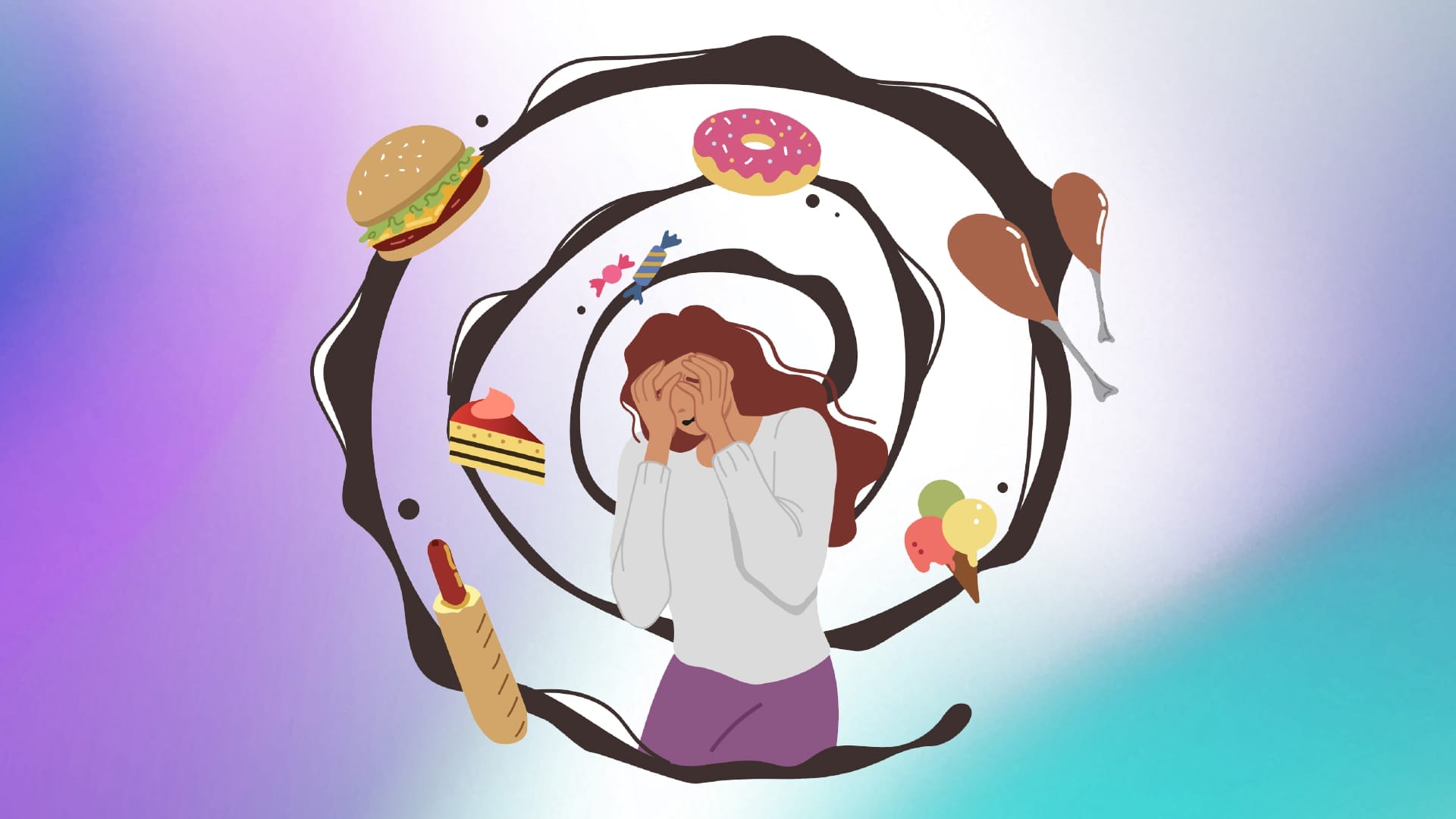
15 Sep Eating Disorders, Anxiety & Depression: Healing When Food Becomes Self-Medication
Many people think of eating disorders (EDs) as being “just about food,” weight, or appearance. The truth is, they often grow out of deeper wounds — and one of the biggest is using food to try to manage overwhelming feelings like anxiety and depression. When you address the root causes, you can begin to unlearn the urge to self-medicate with food.
Here’s what we know, and how recovery can start.
What the Research Shows
-
Eating disorders rarely occur in isolation. In fact, 50-75% of people with an eating disorder (anorexia nervosa, bulimia nervosa, binge eating disorder) also experience symptoms of major depression. Eating Recovery Center+2BioMed Central+2
-
Anxiety disorders are even more common comorbidities. Up to 62% of individuals with an eating disorder have an anxiety disorder at some point. BioMed Central+2NAMI Guilford+2
-
The presence of anxiety or depression before an eating disorder diagnosis is associated with more severe illness: greater eating disorder symptoms, lower body mass index (in anorexia), more hospitalizations, worse quality of life. Frontiers+2PubMed+2
-
Emotional eating (eating in response to negative mood states — anxiety, sadness, stress) is strongly linked with weight gain over time. It acts as a mediator between depression and subsequent increases in weight, especially when combined with other risk factors (e.g. poor sleep, sedentary lifestyle). BioMed Central+2Within Health+2
-
Stress, especially chronic stress, can change hormone levels (like cortisol) and brain/neurotransmitter function, making cravings, impulsivity, and mood swings worse — which can increase vulnerability to disordered eating. Harvard Health+2Cleveland Clinic+2
How Anxiety & Depression Feed Eating Disorder Behaviors
Here are some of the mechanisms through which anxiety / depression often feed into EDs:
-
Emotional Dysregulation
When someone feels intense anxiety or depressive symptoms, they may not have effective ways to soothe that distress. Food can temporarily “numb” or distract from painful thoughts. Binge eating, restricting, or purging often has an emotional trigger: fear, loneliness, shame, self-criticism. -
Negative Self-Image, Shame, and Perfectionism
Depression often includes low self-esteem, self-loathing, or pervasive shame. Anxiety can amplify fears of judgment, failure, or rejection. These feelings may manifest in controlling food, body shape, or weight as a way to pull something in one’s life under control when other things feel chaotic. -
Behavioral Patterns Reinforced Over Time
Using food (or restriction) as a coping mechanism may ease distress temporarily, but over time the patterns become automatic: negative thoughts → distress → food behavior → guilt/shame → more distress. It becomes a loop that’s hard to break. -
Sleep, Fatigue, Cognitive Load
Poor sleep (common with depression and anxiety) impairs emotional regulation and tends to increase cravings for high-comfort foods. Also, when cognitive bandwidth is low (from anxiety or depression), it’s harder to use healthier coping strategies. -
Biological & Neurochemical Overlaps
Neurotransmitter systems involved in anxiety, depression (serotonin, dopamine), stress hormone systems (e.g. cortisol), brain circuits involved in reward, impulse control are also implicated in eating disorders. Genetics and early life stress can set up vulnerabilities. BioMed Central+2PMC+2
Why Addressing Root Causes Matters (vs Just Focusing on “Food Behavior”)
-
Treating only the eating disorder behaviors (binge/purge, restriction) without treating underlying anxiety or depression often leads to relapse. The emotional distress returns, and so do the self-medication behaviors.
-
When you heal anxiety / depression, you reduce many of the triggers: fewer overwhelming emotions, increased capacity to tolerate discomfort, better self-compassion. This weakens the pull toward using food as a coping tool.
-
Often, healing anxiety / depression improves mood regulation, self‐esteem, identity, meaning in life — and those are protective factors that support recovery from an eating disorder.
What Helps: Steps Toward Recovery & Healing
Here are evidence-based strategies that help reduce both eating disorder symptoms and anxiety/depression — so that food stops being the coping tool:
-
Therapy that addresses both
Cognitive Behavioral Therapy (CBT), Enhanced CBT for EDs, Dialectical Behavior Therapy (DBT), Acceptance & Commitment Therapy (ACT) are all helpful. Therapy that works with emotional regulation, distress tolerance, self-compassion tends to be more effective. Verywell Mind+2BioMed Central+2 -
Integrated treatment plans
When mental health professionals assess for comorbid disorders (anxiety, depression, OCD), not just the ED, so both can be treated together. Medication might be part of this, if indicated. BioMed Central+1 -
Mindfulness, self-compassion, and emotional awareness
Learning to notice thoughts, triggers, emotions before they escalate — and having tools to respond differently (journaling, breathing, movement, talking to someone). -
Healthy lifestyle supports
Sleep hygiene, regular movement (non-punishing, enjoyable), social support, reducing isolation — all help reduce baseline anxiety/depression. -
Psychoeducation / awareness
Understanding that cravings, urges, guilt are common parts of the process helps reduce shame. Knowing what’s normal vs. what’s destructive can empower someone to make different choices when distress arises. -
Support groups / peer work
Connecting with others who have been through similar struggles (ED + anxiety/depression) – allows individuals to share coping strategies and reduce the sense of shame and isolation.
Key Takeaways
-
If you’re struggling with an eating disorder, chances are there’s anxiety, depression, or other mental health pain fueling it (or vice versa). You’re not alone.
-
Recovery isn’t just about changing eating behavior — it’s about getting to the emotional roots: the fears, the pain, the self-criticism, the longing for relief.
-
When those root issues are addressed, food loses its power as a self-medication tool. You begin to find healthier sources of comfort, meaning, identity, and coping.
Call to Action / Encouragement
If any of this resonates:
-
You don’t have to do it alone. Reach out to a mental health professional (therapist, psychiatrist) who has experience in eating disorders and mood/anxiety disorders.
-
Consider journaling the patterns: what triggers you to eat (or avoid eating), what emotions show up, how food makes you feel afterward. Awareness is a first step.
-
If you’re in crisis, use hotlines/resources (local or national) — it’s okay to ask for immediate help.
-
Healing is nonlinear. You’ll have setbacks. But each time you choose a healthier coping strategy, you’re rewiring those old pathways.

